
Deploy
Move mobile communications capability into the affected area as conditions and coordination allow.
Our Work
This is where we explain the equipment, deployment model, and services LightBridge brings into communities when normal infrastructure is unavailable.
The response model
Move mobile communications capability into the affected area as conditions and coordination allow.
Create a reliable local connectivity point using independent power and available backhaul.
Provide access directly to impacted families while supporting practical recovery needs.
Monitor equipment, connectivity, and utilization so service can remain dependable throughout the deployment.
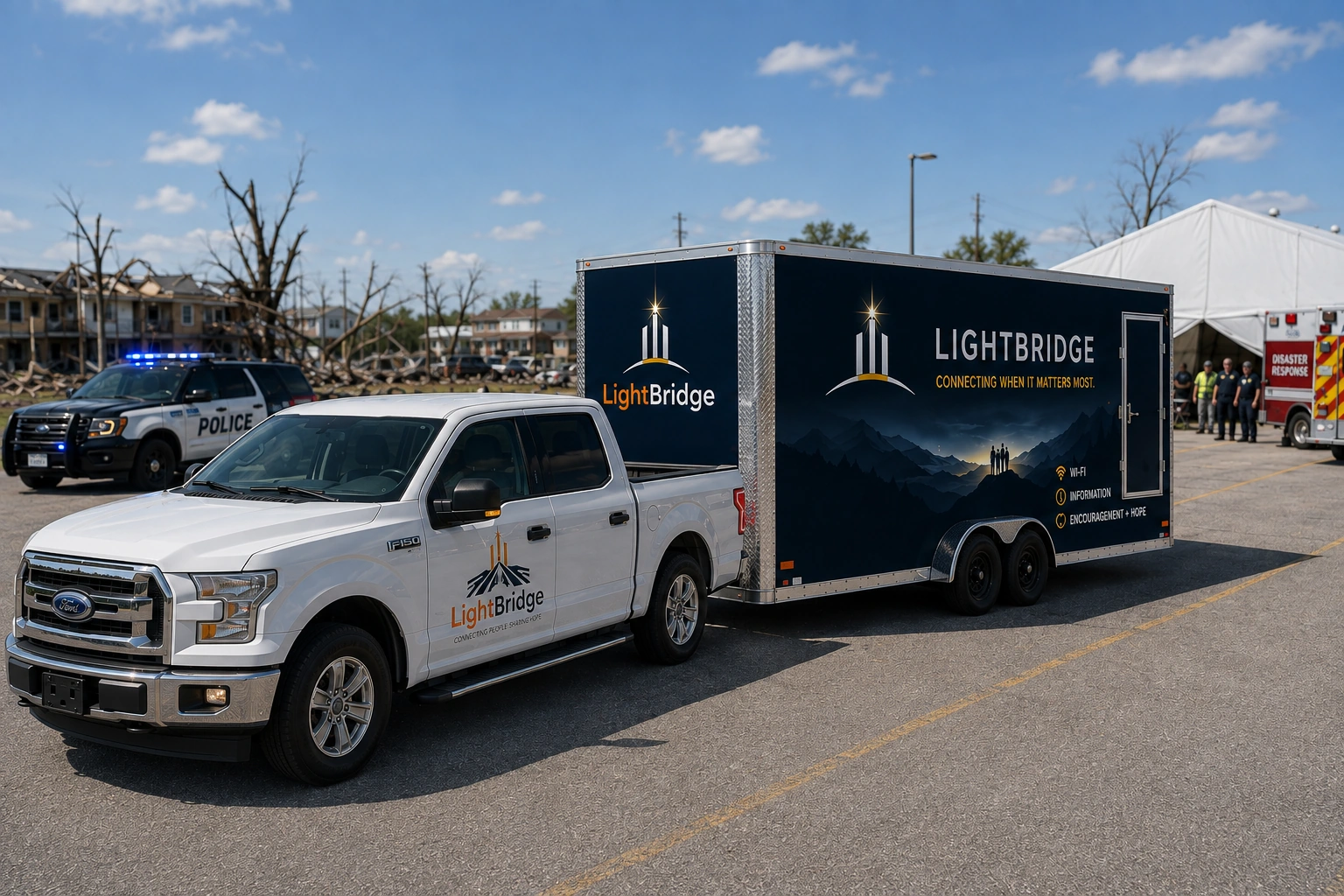
Mobile response trailer
The LightBridge response trailer is designed to provide a centralized communications and support point with extended wireless coverage, independent power, satellite connectivity, and space for field operations.
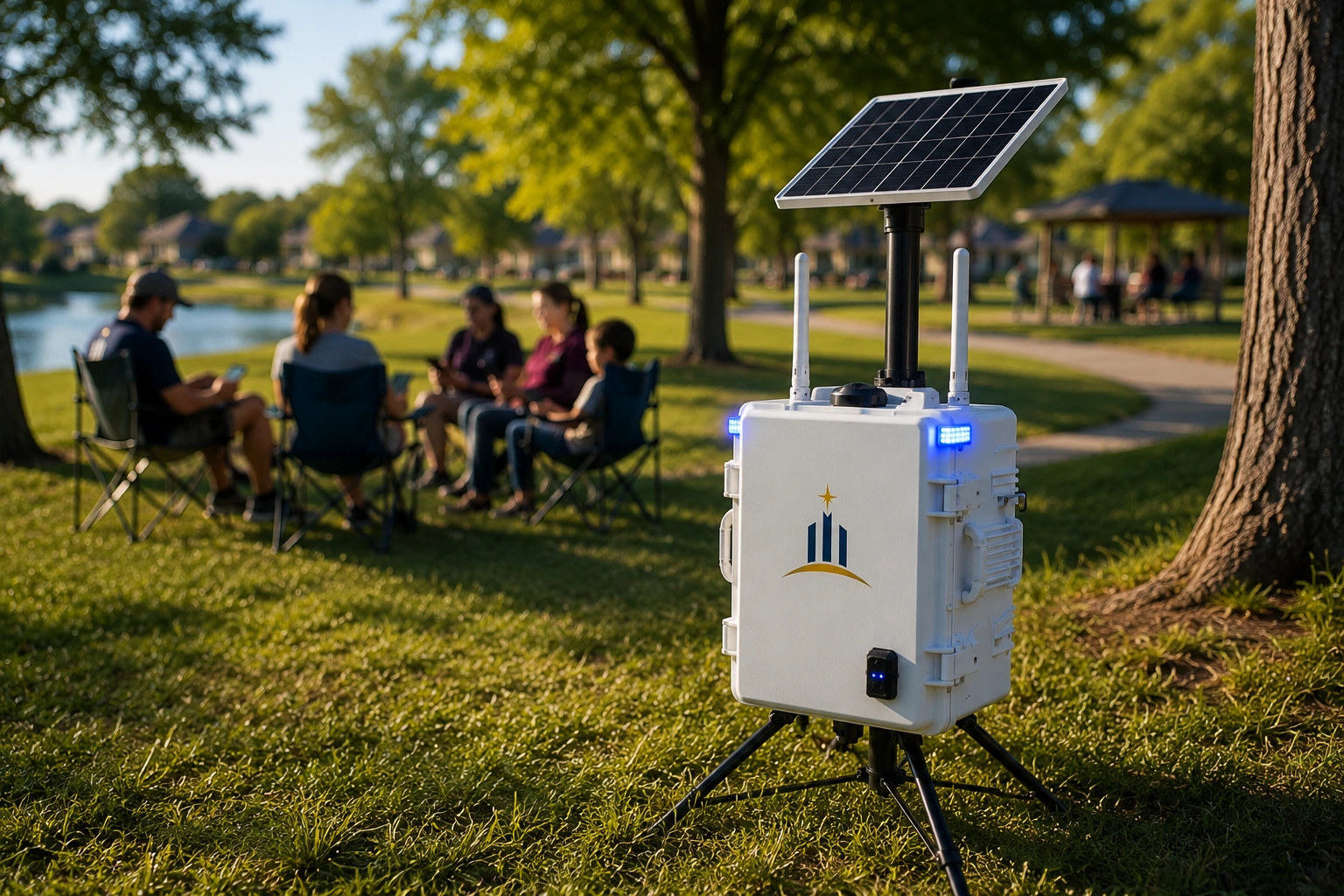
Portable terminals
Smaller LightBridge terminals extend the same mission into parks, neighbourhoods, shelters, or other locations where a full trailer deployment may not be practical.
Who receives service
LightBridge Ministries is built around providing community-facing services to people directly impacted by disaster. These services are provided at no cost to those families.
Where appropriate, separate technical services may also support partner agencies or response organizations without compromising the ministry’s family-first mission.
See How We Measure Impact